EN
EN
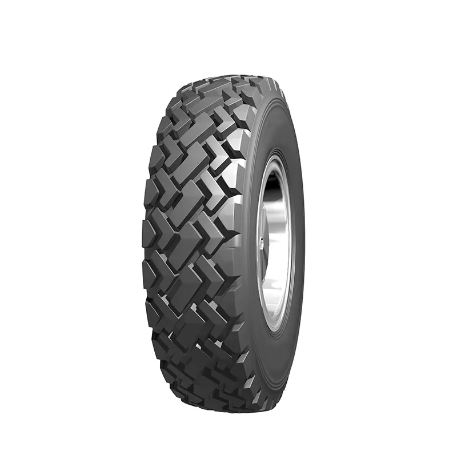
How Substandard Commercial Truck Tire Quality Triggers Preventable Crashes
Blowout mechanics under sustained highway load and heat buildup
The structural integrity of a commercial truck tire is constantly tested by sustained highway speeds and heavy axle loads. Substandard tires—often built with thinner rubber compounds, weaker belt packages, or inconsistent curing—are far more susceptible to failure under these conditions. Under-inflation is a primary trigger: it causes excessive sidewall flexing, generating intense internal heat during high-speed rotation. That heat degrades rubber elasticity and weakens the bond between steel belts and tread. Over time, this thermal fatigue leads to tread separation or sudden blowout. Overloading compounds the risk, forcing the tire beyond its design load index and accelerating internal stress. In 2021, tire-related crashes claimed 622 lives (NHTSA), underscoring how easily compromised tire quality escalates into life-threatening failure.
FMCSA 2023 data: Tire failure as the leading mechanical cause of multi-vehicle commercial crashes
Federal data confirms tire failure isn’t theoretical—it’s the most common mechanical factor in multi-vehicle commercial truck crashes. The FMCSA’s 2023 Large Truck and Bus Crash Facts report identifies tire failure as the top vehicle-related cause, surpassing brake deficiencies and other equipment issues. It accounts for over 30% of all mechanical-factor crashes. The agency links these incidents directly to preventable violations: low tread depth, chronic under-inflation, and overloaded axles—all disproportionately prevalent with substandard tires. A broader National Motor Vehicle Crash Causation Survey found that 9% of all crashes involved a vehicle with a pre-existing tire problem, translating to nearly 2.2 million accidents nationwide. These figures reinforce a clear operational truth: rigorous tire selection and maintenance aren’t optional—they’re foundational to crash prevention.
The Three Non-Negotiable Safety Specifications in Every Commercial Truck Tire
Load index, tread depth retention, and heat resistance — how they jointly prevent failure
A commercial truck tire’s load index must match or exceed the vehicle’s gross axle weight rating. Operating below this threshold concentrates stress on the casing, increasing internal friction and heat generation. Tread depth retention is equally critical: FMCSA mandates a minimum of 4/32 inch on steer axles and 2/32 inch on drive and trailer axles—not just for legality, but because those depths are the minimum required to channel water, resist hydroplaning, and protect the underlying belt package from road hazards. Heat resistance—the third pillar—is often underestimated. Tires engineered with low-hysteresis compounds and reinforced sidewalls dissipate heat more effectively under sustained highway loads. These three specs operate synergistically: correct load indexing prevents over-deflection; adequate tread depth preserves wet-weather grip and physical protection; and superior heat dissipation halts thermal degradation. Compromise any one, and the failure chain accelerates—over-deflection leads to overheating, which weakens adhesion, which invites separation.
Traction grade vs. temperature grade: Why both matter for wet‑braking stability and blowout prevention
The UTQG traction grade (AA, A, B, or C) measures stopping distance on wet asphalt at 40 mph—an AA-rated tire can stop up to 30% shorter than a C-rated one, a decisive margin for a fully loaded rig reacting to sudden hazards. The temperature grade (A, B, or C), meanwhile, reflects how well the tire resists heat buildup during sustained highway operation. A C-rated tire may perform acceptably in urban delivery cycles but risks catastrophic overheating above 65 mph. Critically, the two ratings are interdependent: high traction means little if heat-induced belt separation undermines structural integrity. Fleets that pair a soft, high-traction tread compound with a low-temperature-grade casing invite premature tread-belt separation. For true safety alignment, both grades must reflect the truck’s actual duty cycle—speed, load profile, and typical road surface—to keep the tire operating within its safe thermal and mechanical window.
Heavy-Duty Operational Realities: How Load, Speed, and Road Conditions Stress Commercial Truck Tire Integrity
Accelerated degradation pathways in low-tier commercial truck tires under full-load, high-heat scenarios
Low-tier commercial truck tires degrade exponentially under sustained full-load and high-heat conditions. Excessive flexing generates internal friction, pushing temperatures beyond the safe thresholds of inferior rubber compounds. This accelerates tread wear, sidewall cracking, and loss of belt-to-casing adhesion. Unlike premium tires—which use reinforced sidewalls, optimized belt angles, and heat-dissipating compounds—low-tier models lack the engineering margins to absorb repeated thermal stress. As a result, a tire showing modest wear at 50,000 miles may fail catastrophically before 60,000 miles. For fleets operating in high-heat regions or carrying consistent near-maximum payloads, this accelerated degradation transforms routine maintenance into an active safety vulnerability—one that inspection programs and driver training alone cannot mitigate without proper tire specification.
Regulatory Accountability: FMCSA CSA, CVSA Inspections, and the 4/32″ Tread Depth Standard
How tread depth violations directly correlate with CSA severity weights and accident risk thresholds
FMCSA requires a minimum tread depth of 4/32 inch on steer axle tires and 2/32 inch on drive and trailer axles—a standard grounded in empirical traction and durability research, not arbitrary enforcement. CVSA inspectors enforce even stricter out-of-service thresholds during roadside inspections, citing tires below 4/32 inch on steer axles as automatic violations. Each such violation carries a CSA severity weight of 3 points in the Vehicle Maintenance BASIC, directly inflating a carrier’s safety score and triggering heightened FMCSA scrutiny. Crucially, research shows wet-weather stopping distance increases non-linearly as tread depth falls below 4/32 inch—crossing a measurable accident risk threshold long before the legal limit is breached. This makes tread depth not just a compliance metric, but a real-time indicator of braking reliability and crash resilience.
Table of Contents
- How Substandard Commercial Truck Tire Quality Triggers Preventable Crashes
- The Three Non-Negotiable Safety Specifications in Every Commercial Truck Tire
- Heavy-Duty Operational Realities: How Load, Speed, and Road Conditions Stress Commercial Truck Tire Integrity
- Regulatory Accountability: FMCSA CSA, CVSA Inspections, and the 4/32″ Tread Depth Standard