EN
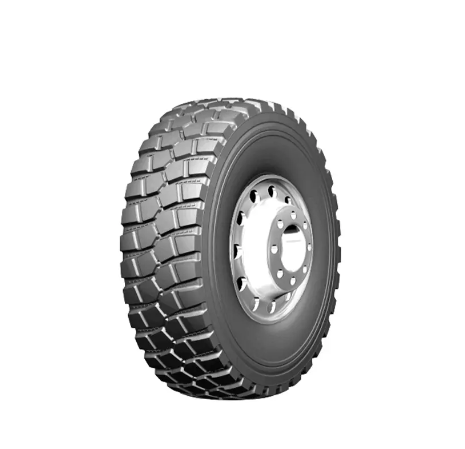
What Makes a Reliable Truck Tire: Core Engineering and Performance Metrics
Tread compound, casing construction, and bead integrity — the three pillars of reliability
A reliable truck tire rests on a triad of engineering pillars: tread compound, casing construction, and bead integrity. The tread compound blends natural and synthetic rubbers with carbon black for wear resistance and silica to lower rolling resistance—silica-enhanced formulations improve fuel efficiency by 2–4% while preserving cut-and-chip resilience critical for highway and regional routes. Below the tread, the casing leverages high-tensile steel belts and multiple textile plies to distribute load pressure and resist deformation under heavy payloads. This structural backbone delays fatigue cracking and tread separation, supporting multiple retread cycles. A 2023 Technology & Maintenance Council study found that casing integrity failures account for nearly 15% of in-service tire removals—highlighting how foundational robust construction is to long-term value. The bead bundle, anchored by a reinforced steel-wire loop, seals the tire to the rim and locks in inflation pressure. Precise bead design prevents air loss and bead-to-rim slippage, which can trigger rapid pressure decay and dangerous overheating. Together, these three elements ensure sustained performance under high torque, heavy loads, and prolonged heat buildup.
How real-world metrics (load capacity, speed rating, UTQG traction/temperature grades) define 'reliable truck tire' in B2B fleet contexts
In fleet operations, reliability is quantified—not assumed—by three key metrics: load capacity, speed rating, and UTQG traction and temperature grades. Load capacity, expressed as a load index and load range (e.g., Load Range G supports 3,750 lb per tire in dual configuration at 100 psi), must align precisely with axle weight specifications. As the Federal Motor Carrier Safety Administration notes, overloading contributes to 20% of tire-related crashes (FMCSA 2022), making proper load selection both a safety imperative and a regulatory requirement. Speed rating—typically L (75 mph) or M (81 mph) for commercial tires—indicates the maximum sustained speed a tire can handle without structural distress; mismatched speeds accelerate heat-induced tread separation. Though originally developed for passenger tires, UTQG grades offer actionable insight: the traction grade (AA, A, B, C) reflects wet-stopping capability, while the temperature grade (A, B, C) measures resistance to heat buildup. A temperature grade of A confirms the tire can safely dissipate heat at sustained highway speeds—reducing blowout risk. In B2B procurement, integrating these metrics with load-range compliance and speed-rating matching enables fleet managers to forecast durability, safety, and total cost of ownership—defining reliability in measurable, operational terms.
Matching Reliable Truck Tires to Operational Demands
Selecting a reliable truck tire hinges on matching its engineering to the vehicle’s duty cycle. Misapplication accelerates wear, compromises safety, and inflates total cost of ownership. The following subsections detail how to align tire design with operational profiles—and decode the specifications that underpin reliability.
Long-haul, regional delivery, urban pickup/drop-off, and vocational applications — aligning tire design with duty cycle
Long-haul highway operations demand heat-resistant compounds and closed-shoulder rib tread patterns that minimize rolling resistance and promote even wear over thousands of miles. Regional delivery trucks encounter mixed road surfaces and weather variability; they benefit from all-position tires with zigzag sipes and moderate tread depth to adapt quickly to shifting traction demands. Urban pickup and drop-off routes involve frequent stops, tight turns, and curb contact—requiring cut-and-chip-resistant compounds and reinforced sidewalls to withstand mechanical abuse. Vocational applications—including construction, logging, and refuse collection—require aggressive open-shoulder designs with deep lugs that self-clean in mud and gravel, plus high ply ratings to endure debris impact and heavy loads. Aligning tread pattern and construction with duty cycle extends casing life, improves fuel economy, and reduces downtime—directly impacting fleet productivity and profitability.
Decoding specifications: Load range (G/H), dual vs. wide-base single fitments, and tread depth thresholds for safety-critical reliability
Load Range G tires support up to 6,175 pounds at 110 psi; Load Range H supports up to 6,610 pounds at 120 psi—selecting the correct range prevents overloading, heat buildup, and premature failure. Dual tire fitments provide redundancy and reduce per-tire load stress, whereas wide-base singles cut vehicle weight and rolling resistance—improving fuel economy only when matched precisely to axle load, suspension geometry, and alignment specs. Tread depth directly affects braking performance and hydroplaning resistance. FMCSA regulations require steer tires to maintain at least 4/32 inch and all other tires at least 2/32 inch (FMCSA tread depth regulations). Yet for safety-critical reliability, many forward-looking fleets proactively replace steer tires at 6/32 inch—to preserve wet-weather stopping distances and avoid out-of-service violations during roadside inspections.
Maximizing Reliability Through Precision Maintenance Protocols
Inflation discipline: FMCSA-backed data on pressure variance, heat generation, and reliability decay
Maintaining precise inflation pressure is the single most impactful practice for preserving a reliable truck tire. FMCSA research confirms that commercial tires running just 20% below target pressure experience a temperature rise of ~30°F—accelerating tread wear by up to 20% and increasing the risk of casing failure by 15% (FMCSA 2023). This heat breaks down rubber compounds and weakens internal bonds, transforming routine maintenance into an acute safety concern. Fleets that enforce daily pressure checks using calibrated tools—and adopt automatic tire inflation systems for consistency—eliminate the random underinflation that drives reliability decay. Uniform pressure across all wheel positions ensures even load distribution, minimizes rolling resistance, and sustains predictable tread wear. Without this discipline, heat-related degradation leads to irregular wear, higher fuel consumption, and unplanned roadside downtime—eroding fleet reliability cumulatively over time. Inflation discipline is not optional; it’s the non-negotiable foundation of precision maintenance.
Rotation, alignment, and wear-pattern diagnostics — turning visual inspection into predictive reliability management
Tire rotation, alignment verification, and systematic wear-pattern analysis convert routine visual inspections into a predictive reliability management system. Each reveals early signals of mechanical stress: heel-toe wear often indicates misalignment, while cupping or scalloping points to imbalance or suspension issues. Rotating tires every 10,000–12,000 miles equalizes wear rates and extends casing life—supporting the consistent performance expected from a reliable truck tire. Laser alignment tools verify that axles are parallel and perpendicular to the thrust line, preventing rapid shoulder wear. Technicians trained to interpret wear patterns can prioritize corrective actions before failure occurs—slashing unplanned replacements. Integrating these diagnostics into a digital maintenance platform allows fleet managers to track wear trends, forecast remaining life, and schedule interventions with precision. This proactive approach replaces reactive tire changes with data-driven decisions—elevating reliability without adding labor hours.
Balancing Performance Trade-offs Without Compromising Reliability
Selecting a reliable truck tire inherently involves navigating a matrix of design trade-offs. No single tire maximizes fuel efficiency, traction, and casing longevity simultaneously. The key is to prioritize the dominant duty cycle while mitigating secondary penalties through intelligent engineering. A tire optimized for low rolling resistance on long-haul routes may sacrifice some wet traction; a deep-tread design for regional service adds weight and heat buildup. The table below outlines common trade-offs and the engineering strategies that sustain reliability.
| Performance Factor | Inherent Trade-off | Engineering Mitigation for Reliability |
|---|---|---|
| Rolling Resistance | Lower resistance improves fuel economy but can compromise wet braking and cornering grip. | Use advanced silica-reinforced tread compounds and optimized tread patterns to maintain traction without generating excessive heat. |
| Tread Depth | Deeper treads extend removal mileage but increase tire weight and rolling resistance. | Match original tread depth to the application (e.g., 13/32" for long-haul steer, 30/32" for drive); use retreading to extend casing life efficiently. |
| Casing Durability | Heavier, reinforced casings resist cuts and impacts but add weight, reducing payload capacity and fuel efficiency. | Employ high-tensile steel belts and optimized bead designs to achieve strength at a lower weight, preserving both durability and economy. |
A data-driven approach is essential to strike this balance. Industry analysis from 2023 shows that a 10% reduction in tire rolling resistance yields a 1–2% improvement in fuel economy. For a fleet operating 100 trucks, that translates into five-figure annual savings—without compromising reliability—if the tire is correctly specified for the route. Ultimately, the long-term reliability of a truck tire is not a static attribute—it is a strategic equilibrium achieved by aligning construction with operational reality and enforcing rigorous inflation and alignment protocols.