EN
EN
The Tread Pattern is a Business Decision, Not an Aesthetic Choice
A truck tire’s tread pattern looks aggressive or smooth, chunky or sleek. It is easy to treat that visual impression as a matter of style. In reality, the rubber blocks and grooves sculpted into a tire’s surface determine how much fuel a fleet burns every single month, how safely a driver can brake on wet pavement, and whether a casing survives long enough to be retreaded. The tread is the only part of the truck that actually touches the road, and the way it interacts with asphalt, gravel, mud, and snow is governed by physics, not marketing. Rib patterns, lug patterns, and block patterns each serve fundamentally different purposes. A rib tire on a muddy logging road is just as mismatched as a deep lug tire humming down a dry interstate at 65 miles per hour. The real skill is matching the pattern to the actual route the truck runs, not to the hypothetical worst case scenario it might encounter once a year. When a fleet gets this right, the payoff shows up in fuel receipts and maintenance logs. When they get it wrong, the evidence is scattered across the yard in the form of prematurely worn casings that should have lasted tens of thousands of miles longer.
Rib Patterns and the Long Haul Efficiency Formula
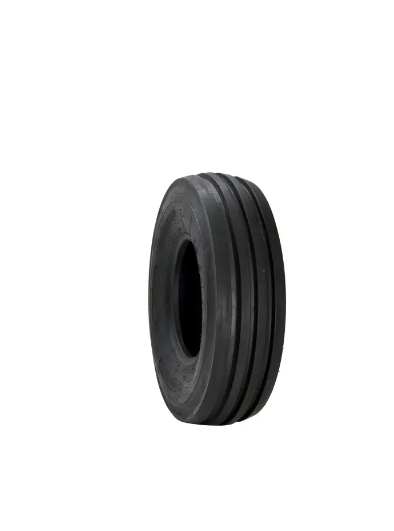
The rib tire is the dominant choice for steer axles on highway trucks, and its design logic is remarkably simple. Continuous circumferential grooves running around the tire channel water away from the contact patch, preserving grip on wet roads while leaving long, uninterrupted strips of rubber to bear the load. Because the ribs do not squirm against the pavement the way individual tread blocks do, a rib pattern generates less rolling resistance. Less rolling resistance means less diesel burned per mile. A truck fleet based in the Midwest once tracked fuel consumption before and after switching from an aggressive block pattern to a fuel efficient rib design on their steer axles. Over the course of a year, the reduction in rolling resistance contributed to a fuel economy improvement that, while modest in percentage terms, added up to a significant dollar figure when multiplied across dozens of trucks running high annual mileage. The trade off is traction. Rib patterns provide limited biting edges for loose surfaces and can struggle in mud or snow when compared to something chunkier. For a truck that rarely leaves the interstate, that limitation is irrelevant. The mission of the steer tire is stable tracking, cool running, and predictable wet braking. The rib pattern delivers all three, and it does so without wasting energy.
Lug Patterns and the Traction Trade Off
Deep, chunky lug tires are built for situations where the road surface is more of a suggestion than a guarantee. Construction sites, unpaved mining access roads, and winter conditions with packed snow demand the aggressive biting edges that only an open shoulder lug pattern can provide. The wide grooves and large individual tread blocks dig into soft ground and eject mud and stones to maintain forward momentum. This capability comes with a set of compromises that fleet managers need to budget for. Lug tires are louder. The air pumping effect as each block slaps against the pavement produces a hum that can fatigue drivers over long highway stretches. The blocks flex more under load, generating heat that accelerates tread wear and shortens overall service life compared to a rib tire on the same axle position. Rolling resistance increases measurably, which translates directly into higher fuel consumption. There is also the matter of irregular wear. Lug tires run on pavement at highway speeds tend to develop heel and toe wear, where each block wears unevenly from leading edge to trailing edge, creating a sawtooth profile that amplifies vibration. A vocational fleet running dump trucks and concrete mixers might accept all of these trade offs without hesitation because the traction is not negotiable; the truck simply cannot work without it. The mistake happens when a fleet that runs 90 percent highway miles chooses a lug pattern because the tread looks tougher.
Block Patterns, Mixed Service, and the Compromise That Works
Not every truck fits neatly into a highway or off road category. Regional delivery trucks, utility service vehicles, and certain vocational rigs spend their days moving between urban streets, rural highways, and occasional gravel lots. The block pattern, sometimes called an all position tread, serves this mixed duty profile by offering a middle ground. Block patterns break the tread into smaller, more numerous individual segments separated by a network of grooves. This provides more biting edges than a rib tire for loose surface traction, while maintaining better high speed stability and lower rolling resistance than a full open shoulder lug design. A concrete pumping company in the southeastern United States made the switch from aggressive drive axle lugs to a block pattern after realizing their trucks spent most of their mileage on asphalt driving between job sites, with only the final few hundred yards on unpaved ground. The block tires maintained enough traction for those short off road sections while cutting fuel costs and cabin noise on the highway legs. The block design also tends to distribute load more evenly across the tread face, which helps resist the irregular wear patterns that plague lug tires in mixed service. For the fleet manager who needs one tire to do a reasonable job in multiple environments, the block pattern remains one of the most practical tools available.
| Tread Pattern Type | Best Application | Key Weakness |
|---|---|---|
| Rib Pattern | Long haul highway, steer axle positions, trailer axles | Limited traction on mud, gravel, and snow covered roads |
| Lug Pattern | Off road construction, mining, logging, severe winter conditions | High rolling resistance, road noise, and accelerated wear on pavement |
| Block Pattern | Regional delivery, mixed service, all position applications | Compromise design; does not excel in any single extreme environment |
| Closed Shoulder Drive Pattern | Highway drive axles needing traction with fuel efficiency | Less effective in deep mud than open shoulder lug designs |
Reading Wear Patterns to Refine the Spec
The tread pattern that a truck runs today is not a permanent decision. Smart fleet operators treat tire wear as a continuous feedback loop. The way a tire wears reveals whether the selected pattern matches the actual operating conditions. Heel and toe wear on a lug tire driven mostly on pavement suggests the truck needs a less aggressive pattern or a different compounding for the application. River wear, a wavy erosion pattern along the ribs or blocks, often indicates the tire is running at excessive temperatures, possibly from overloading or sustained high speed on a hot surface. Cupping or scalloped wear around the tread circumference points to suspension or balance issues rather than the tread design itself, but switching to a more forgiving pattern can sometimes mask the symptoms long enough to get through a maintenance interval. When a fleet tracks wear patterns across their entire inventory, they begin to see which tread designs deliver the longest, most uniform service life for specific routes and seasons. This data driven approach changes tire procurement from a reactive purchase to a strategic investment.
The Manufacturing Precision That Guards Against Irregular Wear
A tread pattern is only as good as the manufacturing process that produces it. Even the most intelligently designed tread geometry will underperform if the curing is inconsistent, the compound mixing is imprecise, or the dimensional tolerances drift between production batches. A manufacturer that controls its entire production chain, from compound development to final inspection, can deliver tread patterns that wear predictably and uniformly. Sunote Tyre operates with that integrated manufacturing discipline. When a fleet mounts a set of drive tires from a supplier with that level of process control, the tread blocks are uniform in height and stiffness from the first mile. That consistency means the pattern performs as engineered, not as a rough approximation of the design intent. For a business that depends on tires to protect drivers, meet delivery schedules, and control operating costs, the difference between a precisely manufactured tread and an inconsistent one shows up in every fuel bill and every tire changeout.
Table of Contents
- The Tread Pattern is a Business Decision, Not an Aesthetic Choice
- Rib Patterns and the Long Haul Efficiency Formula
- Lug Patterns and the Traction Trade Off
- Block Patterns, Mixed Service, and the Compromise That Works
- Reading Wear Patterns to Refine the Spec
- The Manufacturing Precision That Guards Against Irregular Wear