EN
EN
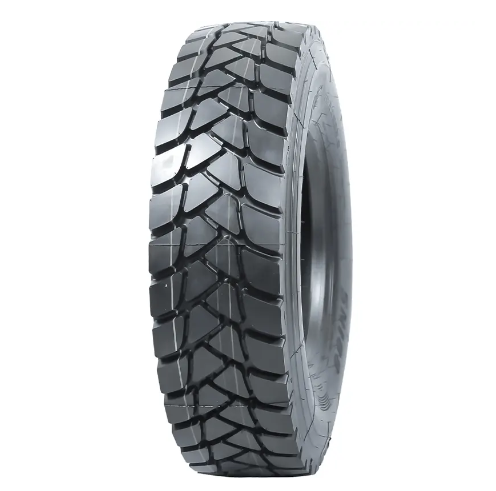
Proactive Maintenance Strategies for Mining Semi Truck Tyres
Why preventive maintenance prevents premature casing failure
Preventive maintenance minimizes premature casing failure in mining semi truck tyres by identifying and resolving issues before they escalate. Regular pressure checks, visual inspections for cuts or bulges, and tread depth monitoring significantly reduce catastrophic failures. Undetected underinflation accelerates casing fatigue—industry studies show it increases failure risk by up to 68%. Scheduled interventions like rotation and alignment distribute wear evenly, extending casing lifespan. Operators using structured programs report 40% fewer unplanned replacements, directly lowering operating costs. This systematic approach transforms tyre management from reactive troubleshooting to strategic asset optimization.
How a leading global mining company’s predictive inspection protocol cut unscheduled replacements by 37%
A major mining operator implemented AI-driven predictive inspections using thermal sensors and vibration analysis to detect early-stage casing anomalies in mining semi truck tyres. Their protocol identified micro-fractures and internal separations up to 300 hours before reaching failure thresholds. Real-time integration with telematics enabled adaptive maintenance scheduling, reducing roadside interventions by 52%. Within 18 months, unscheduled replacements fell by 37%, delivering approximately $740k in annual savings [Ponemon Institute, 2023]. The system demonstrates how predictive technologies outperform calendar-based maintenance—shifting tyre management from scheduled oversight to condition-driven optimization.
Load Management and Its Effect on Mining Semi Truck Tyre Longevity
The impact of axle load imbalance on shoulder wear rates
Axle load imbalance accelerates shoulder wear in mining semi truck tyres by concentrating stress on specific contact points. When weight distribution is uneven, overloaded tyre shoulders experience up to 40% faster wear, generating excessive heat and structural fatigue that leads to premature casing failure. Mitigation begins with automated weighing systems during loading and reinforced by quarterly axle load audits. Proper distribution reduces irregular wear patterns and extends casing lifespan by 15–20%, significantly lowering replacement costs.
Integrating payload monitoring and haul road profiling for dynamic load balancing
Combining real-time payload sensors with haul road terrain mapping creates a proactive load management system. Weight distribution monitors alert operators to imbalances before movement, while road profile data identifies segments causing dynamic load shifts—such as steep grades or rutted surfaces. This dual approach enables adaptive speed adjustments and on-the-fly load redistribution, maintaining optimal inter-tyre pressure balance. Mines adopting this integration report 29% fewer irregular wear incidents and 18% longer tyre service life. The system also delivers actionable insights for road maintenance crews to rectify vibration-inducing terrain features.
Tyre Pressure Optimization Using Real-Time Monitoring Systems
How underinflation drives avoidable casing failures in mining semi truck tyres
Underinflated mining semi truck tyres suffer accelerated casing deterioration due to excessive sidewall flexing and heat buildup. When pressure falls below recommended PSI thresholds, the contact patch distorts—concentrating stress on shoulder regions and accelerating wear while compromising steel belt integrity and ply adhesion. Industry data shows tyres operating at just 80% of optimal pressure fail casings 3.5 times more frequently than properly inflated units [Mining Tyre Wear Report, 2024]. Compounding effects include:
- Operating temperatures exceeding rubber compound limits
- Belt layer separation from repetitive flex fatigue
- Impact fractures caused by rock penetration during abnormal deflection
Maintaining precise inflation eliminates these failure mechanisms, extending casing lifespan by up to 38% in extreme haul conditions.
TPMS–telematics integration for adaptive inflation scheduling
Modern Tire Pressure Monitoring Systems (TPMS) integrate with fleet telematics to enable dynamic pressure optimization for mining semi truck tyres. Ruggedized sensors continuously transmit pressure and temperature data to central processing units, where advanced algorithms analyze real-time measurements against operational variables:
| Parameter | Influence on Inflation Needs |
|---|---|
| Ambient temperature | ±2% PSI per 10°C change |
| Payload weight | Increased pressure requirements |
| Haul road conditions | Vibration-based adjustments |
| Speed profiles | Heat buildup compensation |
This integration enables predictive inflation scheduling—automatically triggering service alerts before pressure drops reach critical thresholds. Mining operations implementing these systems report 27% fewer underinflation-related downtime incidents and 19% longer average tyre service life. The closed-loop monitoring approach ensures tyres consistently operate within optimal pressure windows despite changing environmental and operational demands.
FAQs
Why is preventive maintenance important for semi truck tyres?
Preventive maintenance helps identify potential issues in tyres before they escalate, minimizing premature casing failure and reducing unplanned replacements.
What technologies are used for predictive tyre inspections?
Predictive inspections utilize AI-driven tools such as thermal sensors and vibration analysis to detect early-stage anomalies in tyres.
How does axle load imbalance affect tyre wear?
Axle load imbalance accelerates shoulder wear by concentrating stress on certain areas, leading to faster wear and premature casing failure.
What role does real-time monitoring play in tyre pressure optimization?
Real-time monitoring systems, like TPMS integrated with telematics, ensure tyres operate at optimal pressure levels by continuously monitoring and adjusting to environmental and operational changes.
How can haul road profiling improve tyre longevity?
Haul road profiling identifies terrain segments causing dynamic load shifts, enabling adaptive load balancing and reducing irregular tyre wear.